Payroll Tax Mistakes That Can Cost Employers Thousands in IRS Penalties
Payroll taxes are one of the most important compliance responsibilities employers face.
Unfortunately, many payroll tax mistakes are not discovered until an employer receives an IRS notice, state tax inquiry, or agency audit. What starts as a simple oversight can quickly turn into penalties, interest charges, administrative headaches, and strained employee relationships.
The good news is that many of the most common payroll tax mistakes are preventable.
Here's what employers should watch for in 2026.
Why Payroll Tax Compliance Matters
Employers are responsible for:
- Withholding federal income taxes
- Withholding employee Social Security and Medicare taxes
- Paying the employer portion of Social Security and Medicare taxes
- Depositing taxes on time
- Filing payroll tax returns accurately
- Maintaining payroll records
The IRS requires employers to deposit and report employment taxes according to specific schedules and filing requirements.
Failure to do so can result in penalties, interest, and increased scrutiny from tax authorities.
Payroll Tax Mistake #1: Making Late Payroll Tax Deposits
One of the most common and costly mistakes employers make is depositing payroll taxes after the required deadline.
Employers are generally assigned either a monthly or semi-weekly deposit schedule based on prior tax liability. Missing those deadlines can trigger Failure to Deposit penalties.
IRS Failure to Deposit Penalties
The IRS may assess penalties based on how late the deposit is:
| Days Late | Potential Penalty |
|---|---|
| 1–5 Days | 2% |
| 6–15 Days | 5% |
| More Than 15 Days | 10% |
| Additional collection actions | Up to 15% |
Even employers that file returns correctly can face penalties if deposits are not made on time.
Payroll Tax Mistake #2: Worker Misclassification
Worker classification remains one of the most significant payroll tax risks for employers.
Misclassification occurs when an individual who should legally be treated as an employee is treated as an independent contractor instead. The U.S. Department of Labor and IRS continue to focus on worker classification compliance.
Potential consequences include:
- Unpaid payroll taxes
- Social Security and Medicare tax liability
- Wage and hour violations
- Overtime claims
- Unemployment tax issues
- Employee benefits disputes
Employers should periodically review contractor relationships to ensure workers are classified appropriately.
Payroll Tax Mistake #3: Missing Payroll Tax Filing Deadlines
Even if taxes are paid, employers can face penalties for failing to file required returns on time.
Common filings include:
- Form 941
- Form 940
- W-2 reporting
- State unemployment filings
- State withholding returns
- Local tax filings
The IRS may assess a failure-to-file penalty of 5% of unpaid tax for each month or partial month a return is late, up to certain limits.
Payroll Tax Mistake #3: Incorrect Employee Tax Setup
Payroll systems are only as accurate as the information entered into them.
Common setup errors include:
- Incorrect withholding information
- Wrong tax jurisdictions
- Incorrect work locations
- Missing local tax setup
- Failure to update employee changes
These errors often go unnoticed until tax notices arrive months later.
Payroll Tax Mistake #5: Multi-State Payroll Compliance Errors
Remote work has increased payroll tax complexity.
When employees move or work across state lines, employers may need to:
- Register in additional states
- Update tax withholding
- Adjust unemployment reporting
- Evaluate reciprocal agreements
- Review local tax obligations
Many employers assume payroll tax requirements stay the same when employees relocate. In reality, a single employee move can trigger additional tax compliance responsibilities.
Payroll Tax Mistake #6: Local Tax Compliance Issues
For employers operating in Pennsylvania and Ohio, local tax compliance can create additional challenges.
Common mistakes include:
- Incorrect resident tax setup
- Incorrect work location taxes
- Wrong PSD codes
- Missing local withholding requirements
- Failure to update employee address changes
Unlike many national providers, employers operating in states with complex local tax structures must ensure local tax withholding is configured correctly from the start.
Payroll Tax Mistake #7: Poor Payroll Recordkeeping
Accurate records are essential when responding to agency inquiries or audits.
Employers should maintain documentation related to:
- Employee earnings
- Tax withholdings
- Payroll tax deposits
- Tax filings
- Employee tax forms
- Contractor documentation
Strong recordkeeping practices can help employers resolve issues more efficiently if questions arise later.
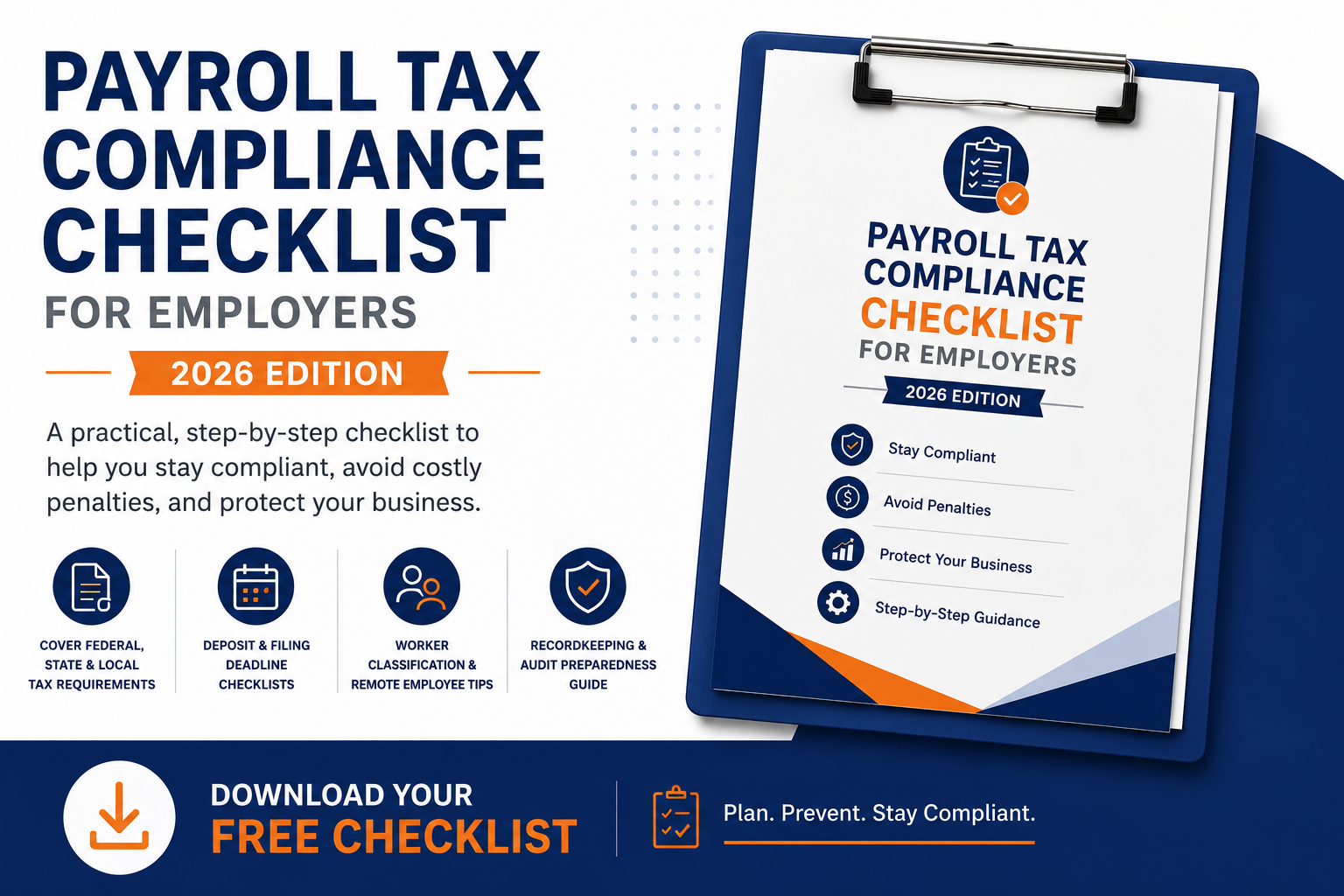
Payroll Tax Compliance Checklist for Employers
Use this checklist to help reduce payroll tax risk:
Review payroll tax deposit schedules annually
Verify employee tax setup and withholding information
Audit worker classifications
Confirm state and local tax registrations
Review remote employee locations
Reconcile payroll tax reports regularly
File required returns on time
Maintain payroll records
Monitor tax law changes
Conduct periodic payroll compliance reviews
Helpful Resources for Employers
Employers looking to strengthen payroll tax compliance can review these resources:
- IRS Employment Taxes Guide
- IRS Employment Tax Due Dates
- IRS Failure to Deposit Penalties
- Department of Labor Worker Classification Guidance
These are excellent authority signals for both readers and search engines.
Frequently Asked Questions
What payroll tax mistakes trigger IRS penalties?
Late deposits, late filings, unpaid payroll taxes, inaccurate reporting, and worker misclassification are among the most common payroll tax compliance issues.
How much are IRS payroll tax penalties?
Failure-to-deposit penalties generally range from 2% to 15% depending on how late the payment is made. Interest may also apply.
What happens if payroll taxes are filed late?
The IRS may assess failure-to-file penalties, interest charges, and additional penalties depending on the circumstances.
Can employers correct payroll tax mistakes?
In many cases, yes. Employers should address issues promptly and work with qualified payroll tax professionals to determine the appropriate correction process.
What payroll records should employers keep?
Employers should maintain records related to wages, tax withholdings, payroll tax deposits, tax filings, and employee tax forms.
Worried About Payroll Tax Compliance?
Payroll tax compliance has become increasingly complex, especially for employers with remote employees, multi-state workforces, and local tax obligations.
CTR Payroll | HR helps employers simplify payroll tax administration, improve compliance, and reduce the risk of costly tax notices and penalties.
Contact Us and let our team help identify potential payroll tax risks before they become expensive problems.
Disclaimer: This blog is for general informational purposes and is not legal advice.
---
Since 1964, CTR has been a trusted partner. As a Payroll & HR Partner, we offer a complete Human Capital Management (HCM) solution to help businesses manage employees from hire to retire. We provide award-winning software and expert, personalized service to automate and simplify every aspect of the employee life cycle: Payroll, HR, Benefits, Workforce Management, Talent Acquisition, Talent Management, Tax, Compliance, and more.
What sets us apart? Our Dedicated Support Rep Model-your dedicated rep will know you, your business, and provide fast, expert service. Our team includes Subject Matter Experts with over 20 years of experience, ensuring you receive guidance through even the most complex situations. 📍 Based in Pittsburgh, PA, CTR is a third-generation, family-owned company with over 60 years in the business. Our core values focus on being “All In,” relentless problem-solving, and exercising the basics better than anyone-principles that have fueled our success.
If you can’t say you LOVE your Payroll & HR provider, it’s time to Contact CTR! 🌐 https://ctrhcm.com/contact 📞 Reach us: (800) 468-2794 📧 Email: sales@ctrhcm.com
View our recent HR management & compliance webinars here: https://ctrhcm.com/resources/